Why calls go straight to voicemail on some carriers
Adoptiv Team··Updated ·3 min read
Short answer
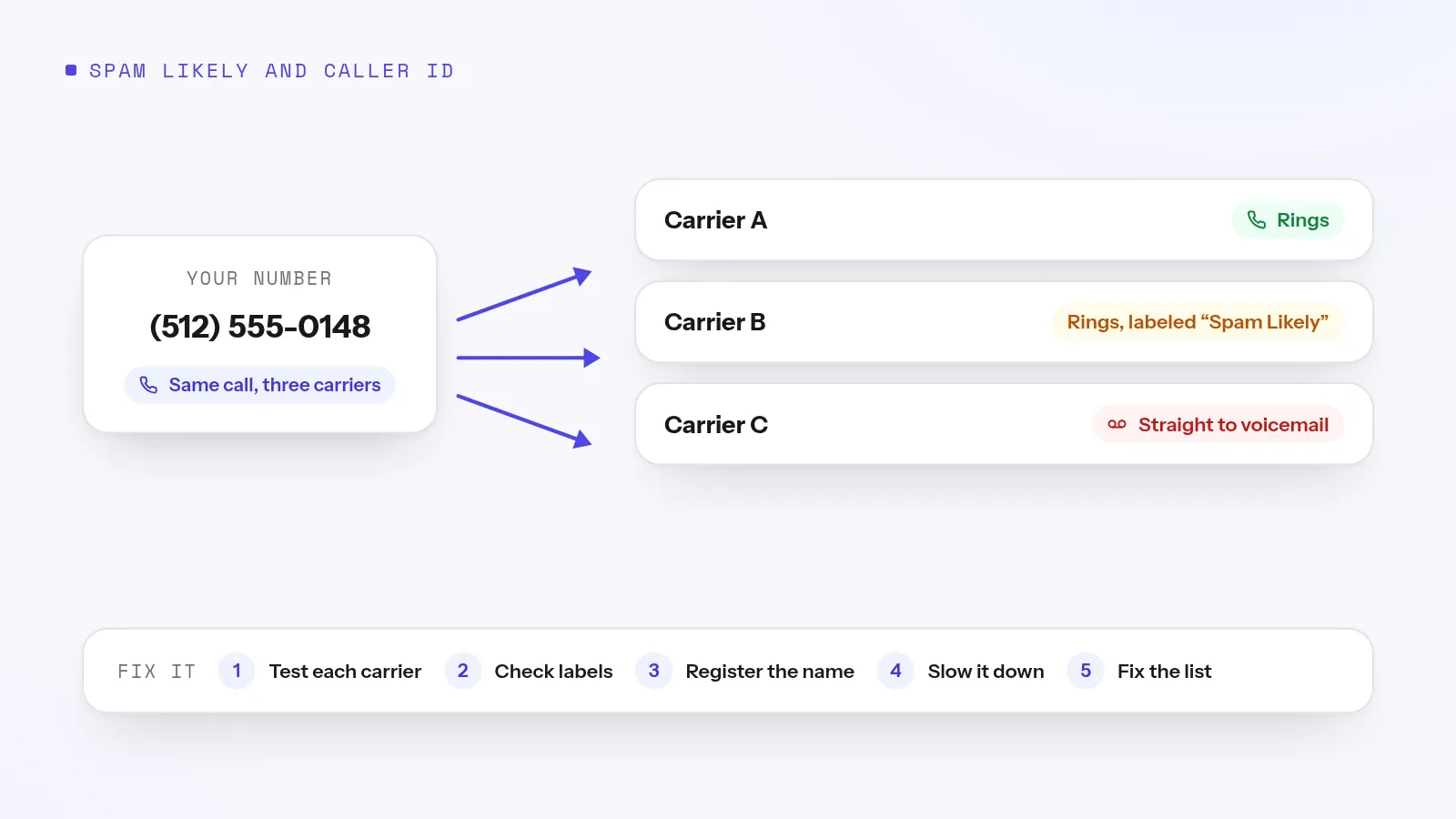
When your calls ring on one carrier but go straight to voicemail on another, the cause is usually that carrier's call filtering: its analytics have judged your number risky and are blocking or diverting the call. The other common causes are on the person's phone, such as settings that silence unknown callers. Test from the same number to phones on each major carrier, check how your number is labeled, and slow down any number that's making a lot of short calls.
A call that never rings is worse than one labeled "Spam Likely": the person never sees it, and you can't tell the difference between "busy" and "blocked" from your side. This post is part of our business caller ID guide.
Why it happens on some carriers and not others
Each major US carrier runs its own call analytics, often with a partner, and each decides separately what to do with calls it thinks are unwanted. One may show a label, another may send the call to voicemail, and a third may let it ring. That's why the same number can behave differently depending on who you call.
Cause
What you see
What to do
Carrier filtering
Goes to voicemail on one carrier only, across many people
Check the number's label, slow it down, register it
Phone setting (e.g. Silence Unknown Callers)
Goes to voicemail for one person, on any carrier
Nothing to fix; leave a clear voicemail and text if you have consent
Call-blocking app
Blocked or labeled for people who installed it
Same as carrier filtering
Phone off or no signal
Immediate voicemail, then normal later
Try again at another time
Number on the person's own block list
Always voicemail for that person
Stop calling that person
This is general information, not legal advice, so check with your own counsel.
On iPhone, Silence Unknown Callers sends calls from numbers not in the person's contacts or recent calls straight to voicemail. Android phones and carrier apps have similar spam and unknown-caller filters. These settings hit every unknown caller equally, so they aren't about your number's reputation.
What makes a carrier filter your number
Carrier analytics look at how a number is used: lots of calls in a short time, many calls that go unanswered, many answered calls that end within seconds, and complaints. A brand-new number with no history and a lot of volume looks the same as a robocaller to those systems. Our post on why your answer rate dropped walks through the patterns. STIR/SHAKEN attestation proves a call really comes from the number shown, but it doesn't stop filtering by itself; see STIR/SHAKEN attestation explained.
Catch a pool number whose answers drop, and rest it automatically. Caller ID pools are in early access.
How to test and fix it
Test across carriers. Call phones on each major carrier from the same number, with Silence Unknown Callers and filter apps turned off, and note what happens on each.
Check the labels. Look the number up and register it through the Free Caller Registry, which sends your details to the main analytics engines.
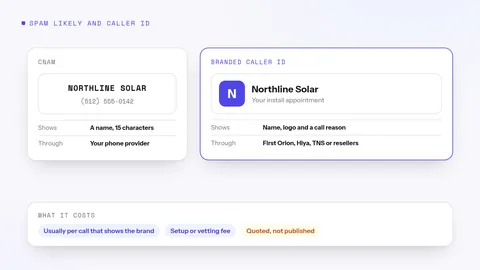
Register your business name. A name on the call (CNAM) helps people decide to pick up, though it won't undo a block by itself.
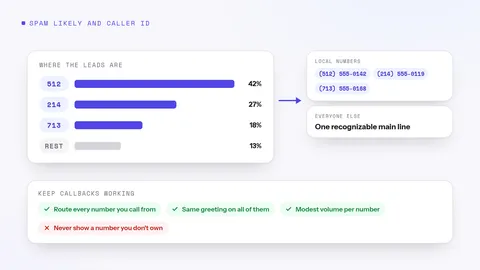
Slow the number down. Spread calls across more numbers, cut calls to lists that never answer, and give a flagged number a rest.
Fix the list. Old or bought lists drive unanswered calls and complaints, which feed the filters.
How Adoptiv helps
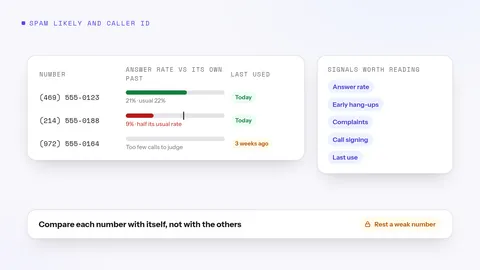
Adoptiv sells US business phone numbers, with one on every seat. Caller ID pools come with Adoptiv's campaigns, which are in early access. Where they're switched on, caller ID reputation gives each pool number that's dialing a 0 to 100 health score each day, from signals that include its answer rate, early hang-ups and the complaints filed against it. A number is flagged when it collects two complaints in 30 days, and, once it has enough calls to judge, when its answer rate falls to half of what it was or when 40% or more of its answered calls end within six seconds. A flagged number rests for seven days automatically while a spare, if the pool has one, takes its calls. Adoptiv submits your business name (CNAM) for pool numbers. It doesn't read the carriers' own labels; it catches the patterns behind them.
When a rep calls by hand, smart caller ID ranks the numbers in the call dialog and marks one "Best" with up to three reasons. History with that contact and a match on the contact's area code both lift a number.
Common questions
Why do my calls go straight to voicemail on Verizon but not on T-Mobile?+
Each carrier filters calls with its own analytics and its own rules, so one can divert a number another lets ring. Check and register the number, and slow down how hard it's being used.
Does Silence Unknown Callers block business calls?+
It sends every call from a number the person hasn't saved or called recently to voicemail. It isn't aimed at your business, and a clear voicemail is your best answer.
Will a new number fix it?+
Sometimes for a while, but if the calling pattern stays the same, the new number gets filtered too. Fix the volume and the list first.
Can anyone guarantee my calls will ring?+
No. Carriers make their own filtering decisions. You can only control how your numbers are used and registered.
Adoptiv is the dialer, the CRM and the AI on one platform, where the busywork logs itself and your reps just talk. Try it free for 14 days, with no credit card.
Questions? Call +1 (844) 955-7733. SIYA answers and puts you through to a person.