Caller ID rotation: when it helps and when it hurts
Adoptiv Team··Updated ·3 min read
Short answer
Caller ID rotation spreads outbound calls across several numbers so no single number carries all the volume. It helps when every number is a real, registered business line that people can call back, and the goal is a sensible volume per number. It hurts when it's used to cycle through numbers faster than carriers can flag them, because that pattern is exactly what spam filters look for.
Rotation is one of the most debated tactics in outbound calling. Done honestly, it's simple load balancing. Done to dodge labels, it gets whole number ranges flagged. This post is part of our complete guide to business caller ID.
Why teams rotate numbers
Carriers and call-labeling apps watch how each number behaves: how many calls it makes, how many get answered, how many end within seconds and whether people complain. A single number making hundreds of calls a day with low answer rates starts to look like a robocaller, even when every call is legitimate. Spreading those calls across several numbers keeps each one's pattern closer to a normal business line. Our post on how many calls per day per number covers what "normal" looks like.
When rotation helps, and when it hurts
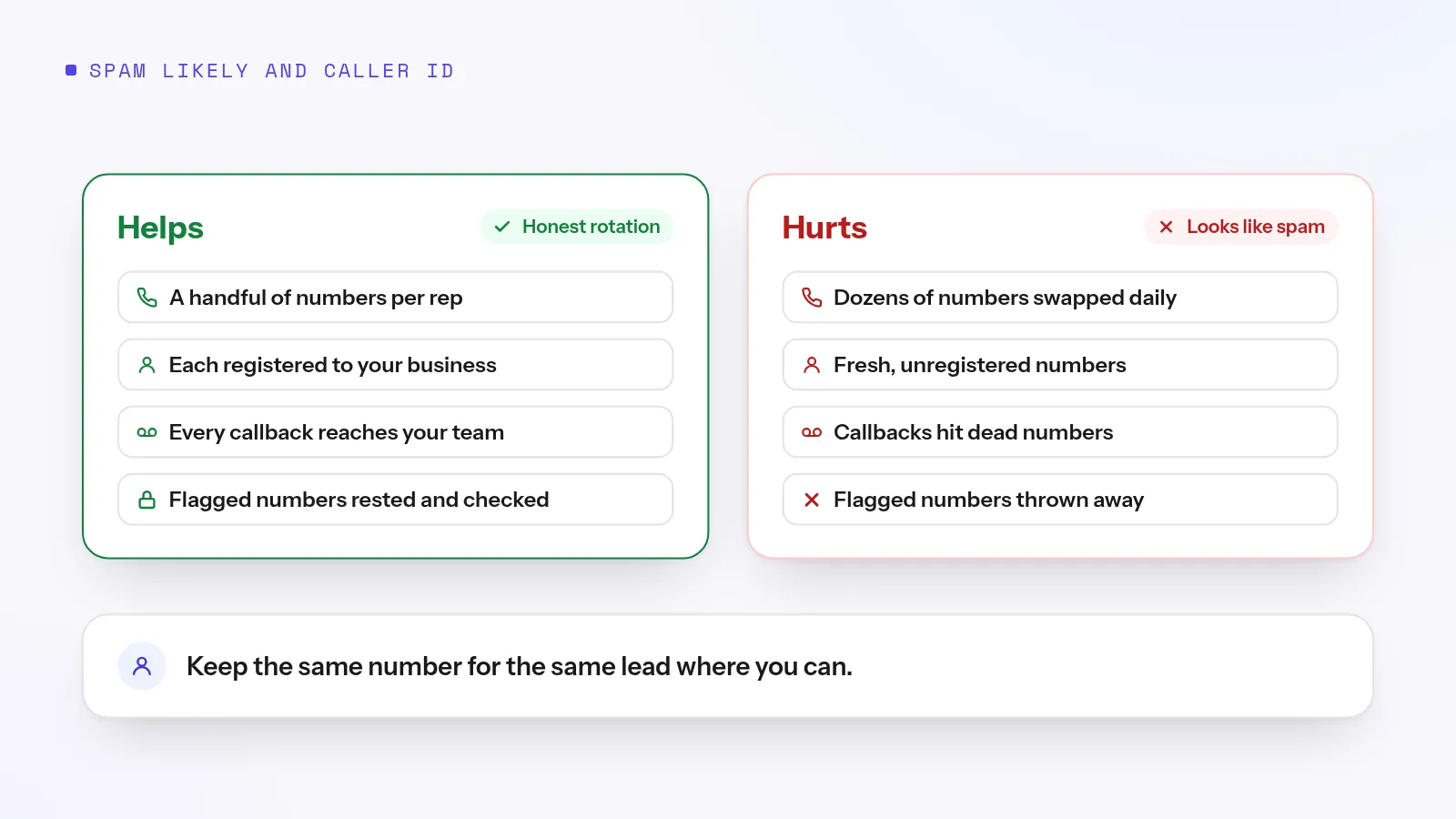
Helps
Hurts
Goal
Keep each number's volume reasonable
Stay ahead of spam labels
Number count
A handful per rep, sized to volume
Dozens of numbers swapped daily
Callbacks
Every number rings back to your team
Callbacks hit dead or unassigned numbers
Registration
Each number registered with your business name
Fresh, unregistered numbers each week
Flagged numbers
Rested and checked
Thrown away and replaced
Contact experience
A lead sees a consistent, local business number
A lead sees a new number every call and stops answering
Pool numbers that look flagged rest on their own. Caller ID pools are in early access, so ask us to turn them on.
Rules for honest rotation
Every number must be yours and reachable. If a lead calls back, they should reach your team or a voicemail that names your business. A number that rings nowhere is the fastest way to collect complaints.
Don't rotate per call to the same person. Calling one lead from five numbers in a week looks evasive. Keep the same number for the same lead where you can.
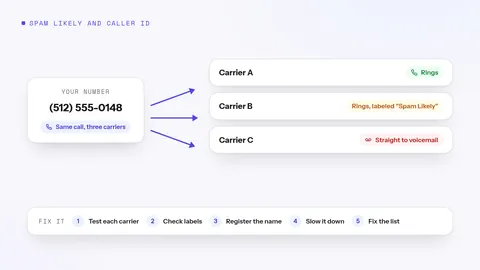
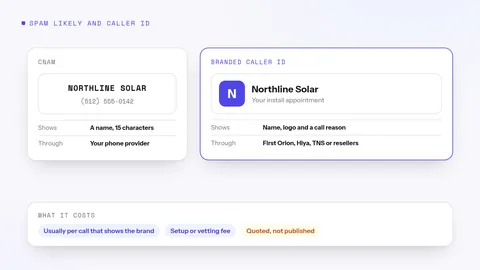
Register the business name. A recognizable caller name helps people answer. See STIR/SHAKEN attestation for the related question of how carriers verify that a call really comes from the number shown.
Rest flagged numbers, don't burn them. A number that suddenly drops in answer rate should stop calling for a while, not get replaced by a brand-new number doing the same thing.
Fix the cause. If numbers keep getting flagged, the problem is usually the list, the pace or the script, not the number.
Rotation and local presence dialing are often sold together. Local numbers can help where you really serve customers, and backfire when they only exist to look local.
Misleading caller ID is illegal under the federal Truth in Caller ID Act, and some states add their own caller ID rules. This is general information, not legal advice, so check with your own counsel.
Caller ID rotation in Adoptiv
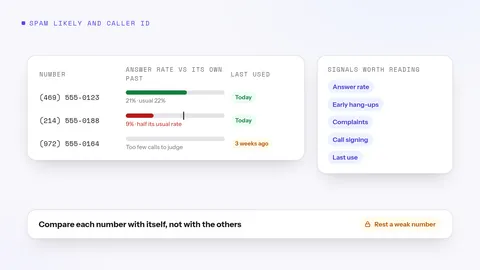
Adoptiv campaigns can call from a caller ID pool. Caller ID reputation gives each pool number that is dialing a daily 0 to 100 health score from its own calls and the FCC and FTC complaints filed against it. Once a number has enough calls to judge, it is flagged when its answer rate halves compared with the two weeks before or when 40% or more of its live answers hang up within six seconds. Two complaints in 30 days flag it at any volume. A flagged number leaves rotation on its own and rests for seven days, and a spare takes its calls if the pool has one; a third flag releases it and a replacement is ordered. Adoptiv doesn't ramp new numbers up for you, so keep their volume low at first. Caller ID pools are in early access. For calls a rep places by hand, smart caller ID suggests which of their numbers to call from.
Common questions
Is caller ID rotation legal?+
Using several numbers you own, each showing who you are, is common. Using caller ID to mislead people or avoid being identified is not. Check the rules for your states with your own counsel.
How many numbers should I rotate?+
Enough to keep each number's daily volume close to what a busy business line makes. For most small teams that's a handful per rep, not dozens.
Does rotation stop Spam Likely labels?+
Not on its own. Labels follow behavior. Spreading volume helps, but a poor list or a pushy pace gets every number flagged eventually.
Should I use a new number for every call?+
No. It confuses the people you call, breaks callbacks and looks like the evasive pattern carriers flag.
Adoptiv is the dialer, the CRM and the AI on one platform, where the busywork logs itself and your reps just talk. Try it free for 14 days, with no credit card.
Questions? Call +1 (844) 955-7733. SIYA answers and puts you through to a person.