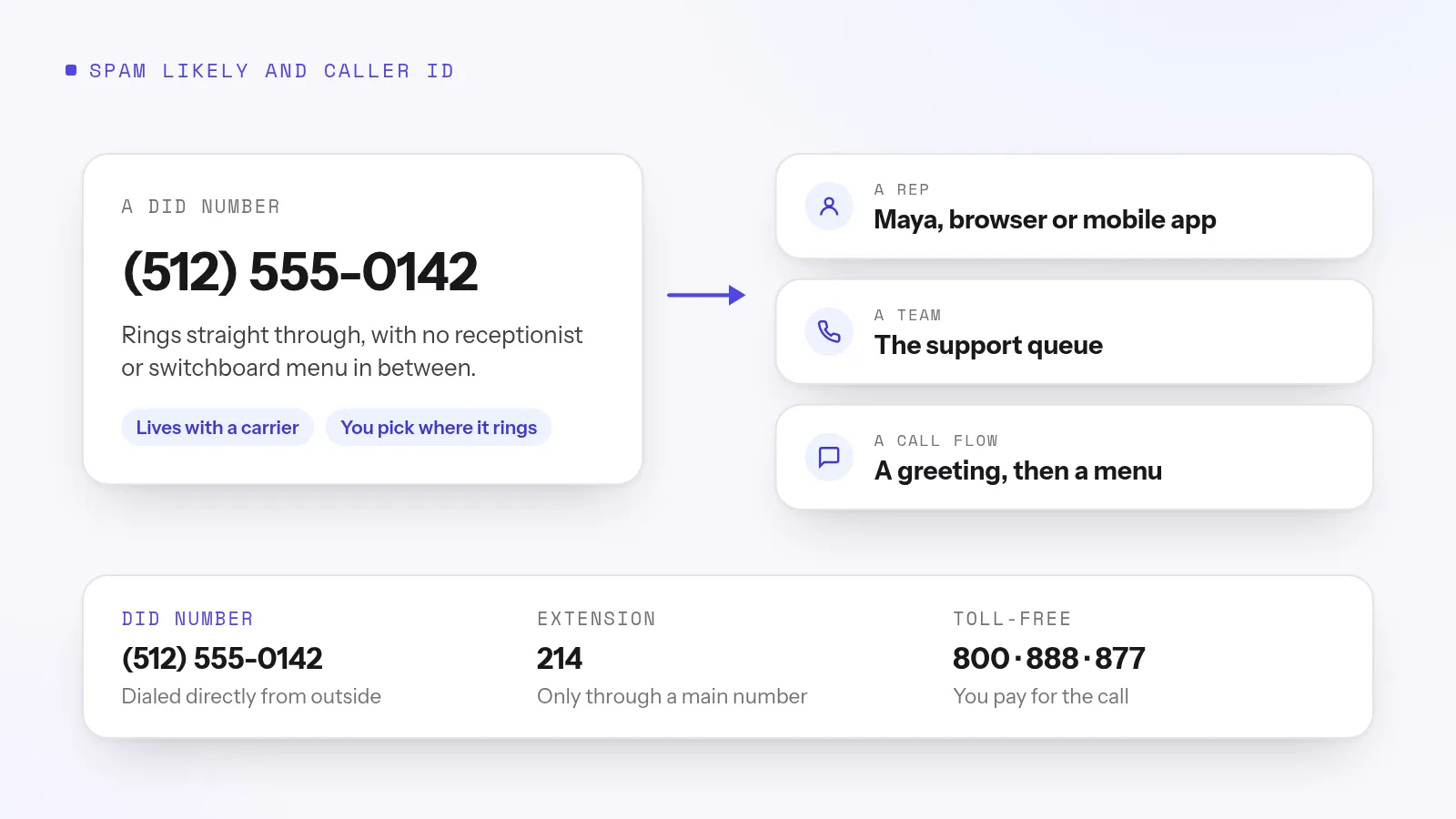
A DID (direct inward dialing) number is a phone number that rings straight through to a specific person, team or call flow, without a receptionist or a switchboard menu in between. Today almost every business number is a DID: it lives with a carrier, not on a copper line, and you decide where its calls go.
DIDs are the building blocks of a business phone system, and the number your customers see when you call them. This post is part of our complete guide to business caller ID.
How a DID works
The name comes from old office phone systems. A company rented a bundle of lines from the phone company and gave each desk a short extension. To reach someone, a caller dialed the main number and asked for them. Direct inward dialing let the carrier pass each call to the right desk without that step, because every desk had its own outside number.
The idea stuck when phones moved to the internet. A DID is now a number the carrier routes to your phone system over the internet. Your system decides what happens next: ring a rep in the browser or on a mobile app, play a greeting, put the caller in a queue, or send them to voicemail after hours.
DID, extension and toll-free
DID number
Extension
Toll-free number
Reachable from outside
Yes, dialed directly
Only through a main number
Yes, dialed directly
Looks like
A local number, e.g. (512) 555-0142
A short code, e.g. 214
800, 888, 877 and similar
Who pays for the call
The caller, as a normal call
No outside call
You do
Best for
Each rep, team or location
Calls inside the company
A national line customers remember
Toll-free numbers are DIDs too, technically. The difference is who pays and how local the number looks. We weigh the two in toll-free vs local number.
Every seat comes with a US business number. Search by area code or digits, and point it at a call flow or a rep.
One per rep. Customers can call back the person they spoke to, and calls aren't lost in a shared inbox.
One per location or team. A branch, a support line and a sales line can each ring their own people.
One per market. A local area code can help in a market where you have customers. It helps far less if the number is only there to look local; see local presence dialing for where that backfires.
One per campaign or source. A number printed in one ad tells you which ad made the phone ring.
DIDs and caller ID
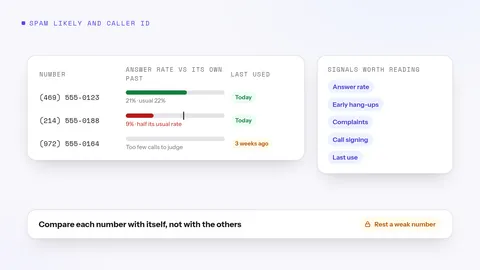
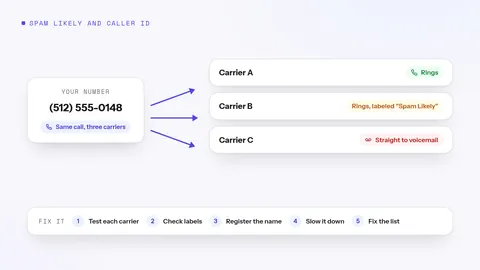
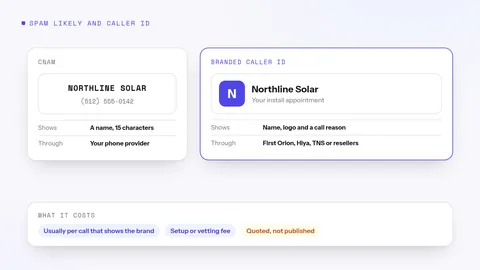
When you call out, the DID you call from is what the other person sees. Carriers score that number on how it's used. A number that makes hundreds of short calls a day and gets few answers is the kind that ends up labeled "Spam Likely". The name shown beside it comes from a separate caller-name record, explained in what is CNAM. Using a number for both calls and texts, from the people who actually work it, keeps it looking like what it is: a real business line.
DID numbers in Adoptiv
Every Adoptiv seat includes a US business number. You can buy more numbers by searching for an area code, or for digits the number should contain, start with or end with, either local or toll-free. Each number sends its calls to one place, a call flow or a rep, and calls and texts share the same number. Adoptiv sells US numbers only.
Common questions
What does DID stand for?+
Direct inward dialing: a number that reaches a person or team directly, without going through a switchboard.
Is a DID the same as a virtual phone number?+
Mostly, yes. A virtual number is a DID that rings over the internet instead of a fixed line, so it can ring a browser, an app or a desk phone.
Can a DID receive texts?+
Many can. Business texting in the US usually needs the number registered for it first.
How many DID numbers does a small business need?+
Start with one per person who talks to customers, plus one main line. Add numbers for locations or campaigns when you need to tell their calls apart.
Adoptiv is the dialer, the CRM and the AI on one platform, where the busywork logs itself and your reps just talk. Try it free for 14 days, with no credit card.
Questions? Call +1 (844) 955-7733. SIYA answers and puts you through to a person.