Hold pauses a call on your own line: the caller waits, usually with music, and only you can bring them back. Call park moves the call to a shared parking spot so anyone on the team can pick it up from another phone. Use hold for short pauses you'll finish yourself, and park when someone else needs to take the call and you don't know where they are.
Both features stop a caller from hearing silence while something happens on your side. The difference is who can end the wait. This guide is part of our guide to contact center software.
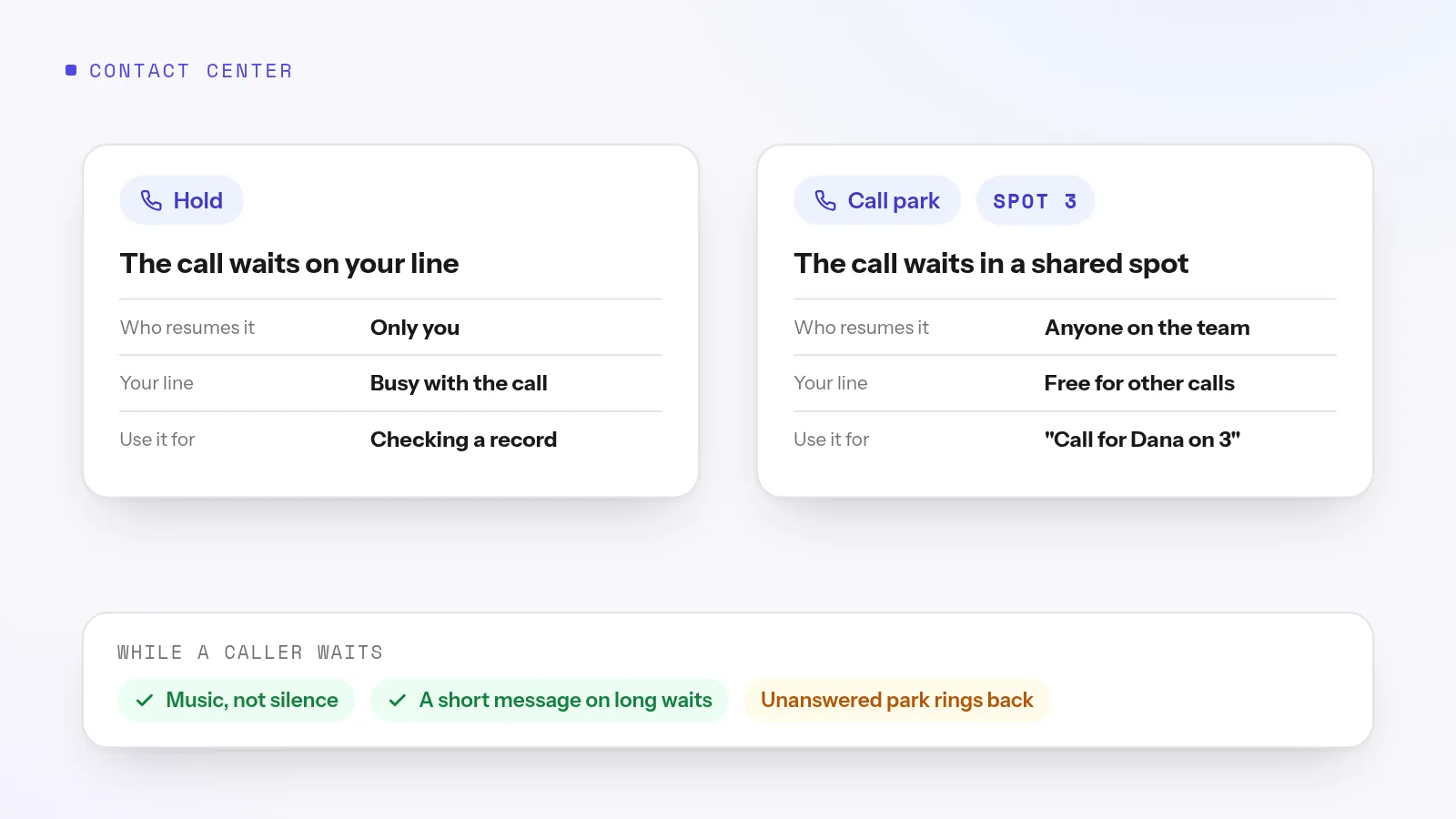
Hold vs park at a glance
Hold
Call park
Where the call waits
On your line
In a shared parking spot, often numbered
Who can resume it
Only you
Anyone who can reach the spot
Typical use
Checking a record, asking a quick question
"Call for Dana on line 3", warehouse or shop-floor teams
Your line while waiting
Busy with the held call
Free for other calls
Main risk
Long silent waits
A parked call nobody picks up
When hold is the right tool
Hold is for pauses you'll end yourself: pulling up an account, checking stock, asking a manager one question. Say how long it will take ("about a minute") and come back on time, even if only to say you need another minute. Callers forgive a wait they were told about far more easily than one that just goes quiet.
When call park makes sense
Park suits teams where the person who answers isn't the person who'll help and doesn't know where that person is: a front desk paging someone on the floor, a shop with staff away from their desks. The receptionist parks the call, announces the spot, and whoever is free picks it up from the nearest phone. If your team sits at desks with a phone app open, a transfer straight to the right person usually beats parking.
Try it on your own numbers. Hold a caller with music, brief a colleague in private, then hand the call over, all from the call bar.
Often what you really want is to hand the caller to a colleague with context. A warm transfer does that in one step: the caller waits on hold while you brief your colleague privately, then you hand over. Our guide to warm vs cold transfers covers when each one fits.
What callers should hear
Music, not silence. Silence sounds like a dropped call, and callers hang up.
A short message if waits run long. A periodic "we haven't forgotten you" stops people giving up.
A time limit. A parked call should ring back to the person who parked it, or go to someone else, if nobody picks it up.
In Adoptiv, hold and resume sit in the call bar with mute, the keypad and hang-up while a call is live. A warm transfer puts the caller on hold with music while a second line rings a colleague's extension or an outside number; you talk privately, then hand the call over or merge into a three-way call. For callers waiting in a call queue, each queue can play its own hold music, and queues without one use your workspace default. You upload tracks to the media library.
Common questions
What is the difference between call park and hold?+
A held call stays on your line and only you can take it back. A parked call waits in a shared spot, so anyone on the team can pick it up from another phone.
How long can a caller stay on hold?+
Technically as long as they'll wait, but most callers give up within a couple of minutes of silence. Play music, check back often, and offer a callback or a message if it'll be long.
What happens to a parked call nobody picks up?+
Most phone systems send it back to the person who parked it, or to another destination, after a set time. Make sure that time is short enough that callers aren't forgotten.
Is a warm transfer better than parking a call?+
When you know who should take the call, usually yes. The colleague hears the context before they speak, and the caller doesn't have to explain again.
Adoptiv is the dialer, the CRM and the AI on one platform, where the busywork logs itself and your reps just talk. Try it free for 14 days, with no credit card.
Questions? Call +1 (844) 955-7733. SIYA answers and puts you through to a person.